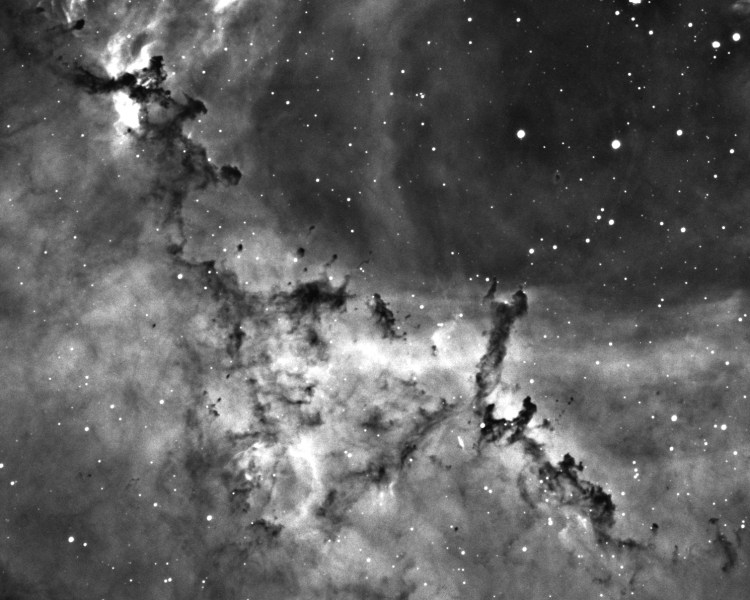
By adding data from a wider band 5nm HA filter the image is softer and some more detail is observed in a few spots.


“It is man’s reason that lifts him to the stars.” Ayn Rand
By adding data from a wider band 5nm HA filter the image is softer and some more detail is observed in a few spots.
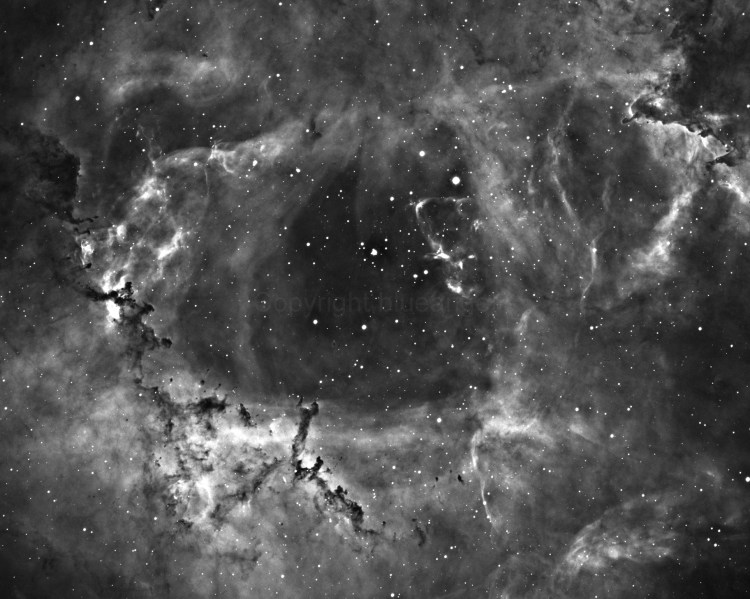
This is an interesting part of the Rosette Nebula.
This is the area that lies behind the observatory.


This is a stacked image of 6 half hour and 7 full hour h-alpha exposures.
This is my first attempt at producing a drone music video (30 seconds). The website’s compression algorithm seems to have added a little quirkiness that actually adds rather than subtracts for those who are not obsessive perfectionists. 🙂
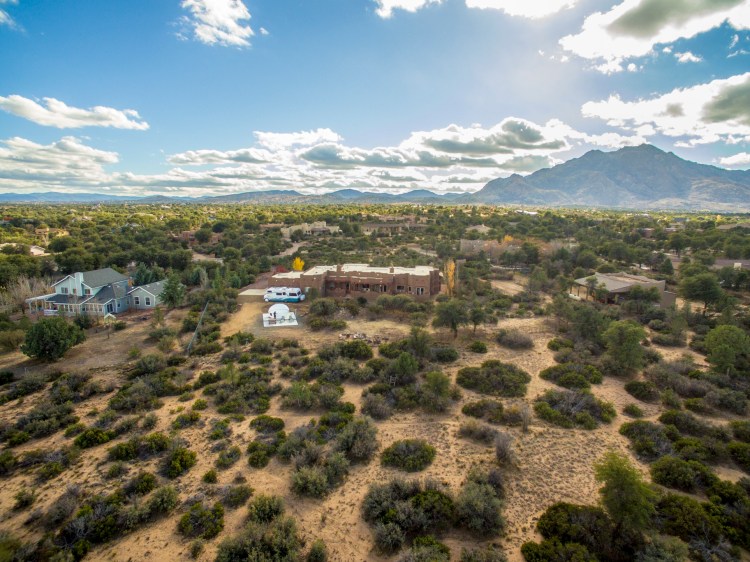
This is a photo of the Astro La Vista Observatory taken with the assistance of a DJI Phantom 3 Professional Drone.
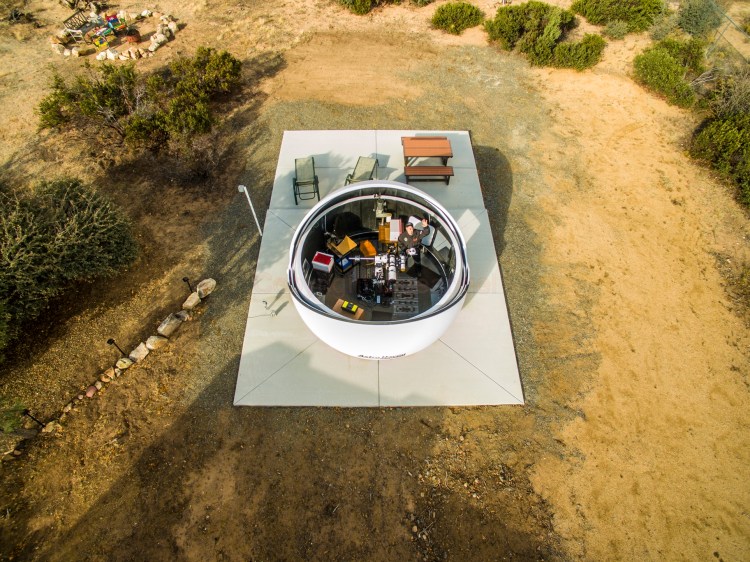
It is a now a good time to image and visually observe the Orion Nebula since it can now be found in the Eastern sky. For those with binoculars, Orion is an easy target. The Horsehead Nebula is located just to the south of the star Alnitak, which is the star that is farthest east on Orion’s Belt. I have always been fascinated by this one, but alas it is rare to run into anyone who has actually visually observed this nebula through the eyepiece of an amateur scope. So far I have taken about 16 half hour exposures (8 hours)through 3nm H-Alpha and OIII filters made by Astrodon. The scope is an Astro-Physics 130mm refractor. The camera is a QSI 690wsg camera with an eight position filter wheel. The camera chip is cooled to -10 degrees Centigrade. The photo was processed with Maxim DL, Photoshop CS6, and Pixinsight.

 Astro La Vista Observatory