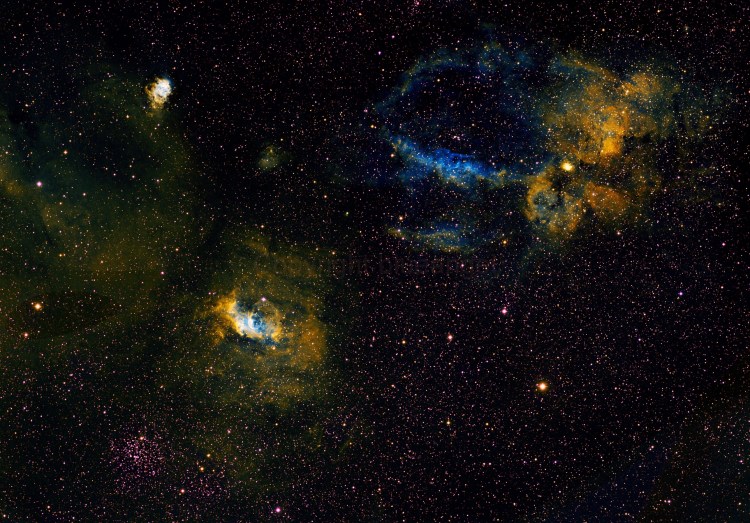
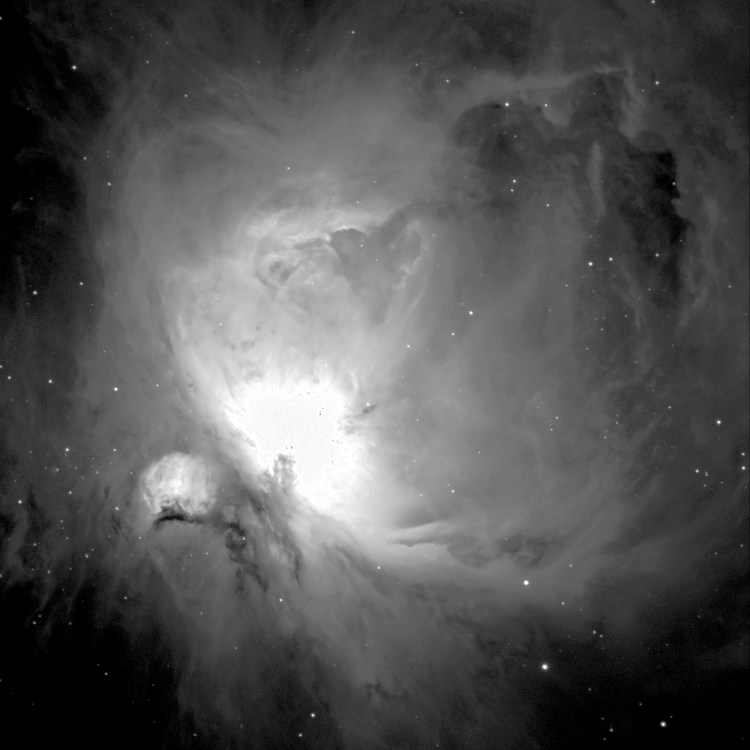
With clouds hanging over the observatory, there is another option. You can process raw images from a remote observatory. Raw images for this project were taken last September from a remote imaging observatory that is located in New Mexico at an elevation of 7400 feet. The telescope was a 106mm Takahashi FSQ 106EDXIII telescope. A total of over 100 half hour narrow band exposures were stacked for a total exposure time of 50 hours. This is actually a two panel mosaic that was stitched together with Microsoft ICE. Other software included Adobe Photoshop, Maxim DL, and Pixinsight.
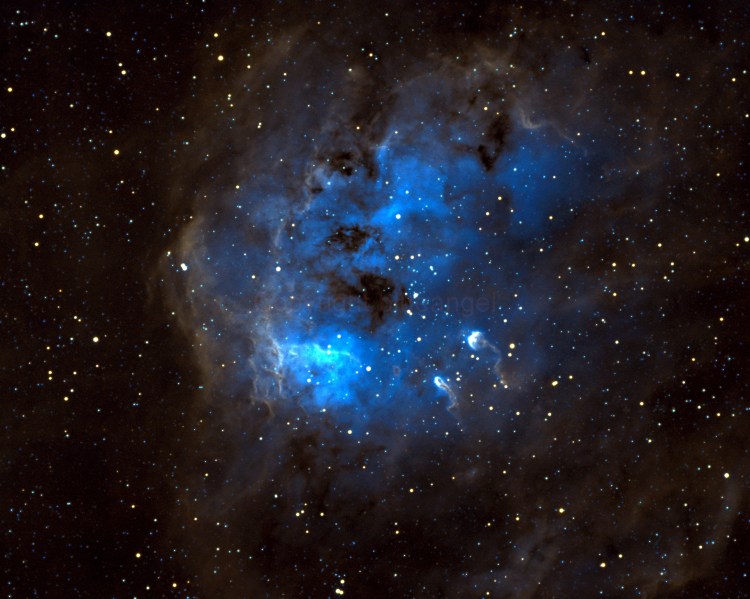 The clouds are moving in, so imaging on this nebula has ended. Three narrow band filters were used and were assigned RGB colors based on what is called the Hubble palette. This was tweaked by removing some of the green coloration while emphasizing blue. A total of 35 thirty minute images were stacked, for a total imaging time of 17.5 hours.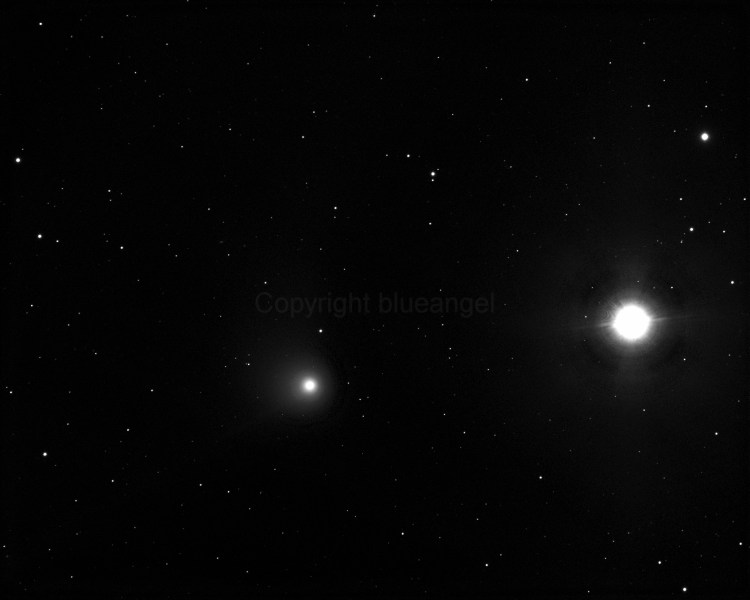
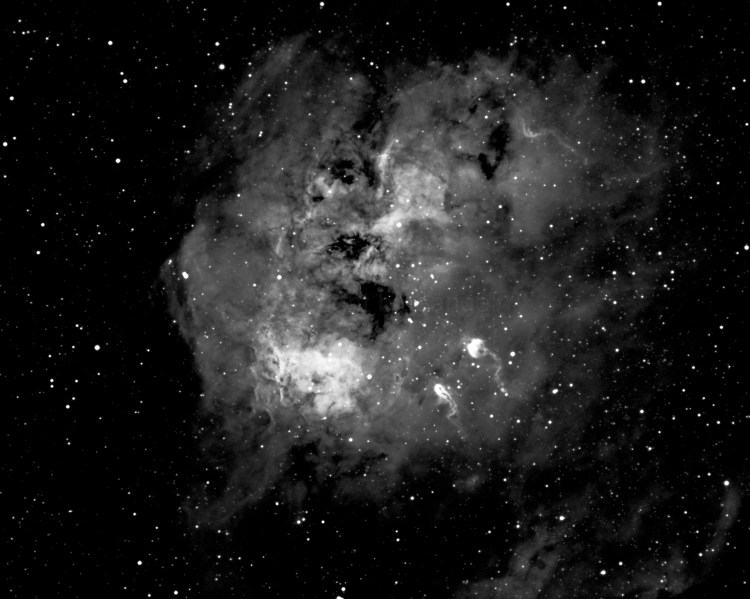
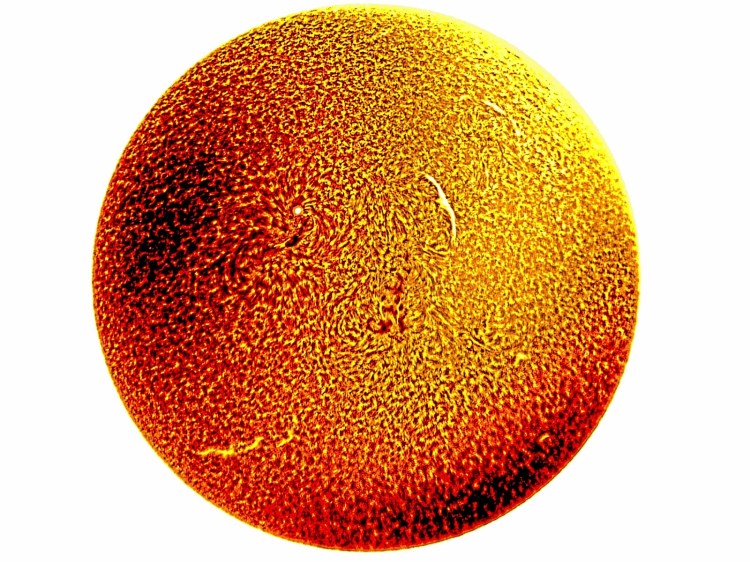 For this solar image I used an Imaging Source DMK51AU02.AS video camera. With its large format it can capture the whole sun in a single image with the Lunt Systems 80mm solar refractor. I used a video frame rate of 7.5 frames per second and combined 80% of 2000 images to produce the final image. The image was inverted and sharpened in Photoshop. The white spot is actually a sunspot.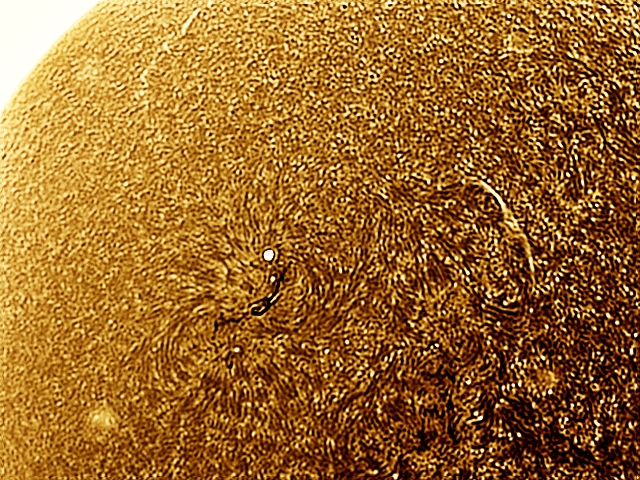
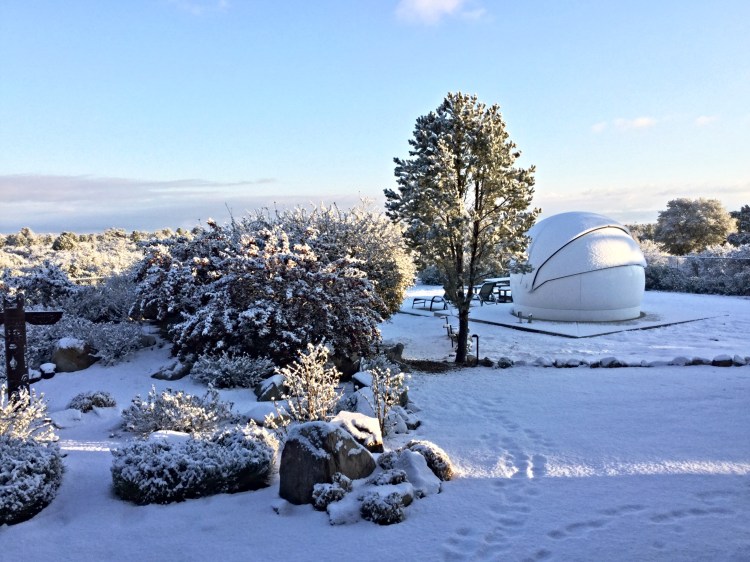
 Astro La Vista Observatory