BUBBLE NEBULA – HALLOWEEN VERSION

I was surprised to see the gremlin’s face when I processed this image of the Bubble Nebula (NGC 7635). This was obtained by stacking about 13 hours of exposures (39×10 minutes and 28×15 minutes) taken with the Astro-Physics f6.3 130mm refractor in combination with the QSI 690 camera. My Astro-Physics mount is getting more accurate as time goes on, so these exposures were done with no guide camera. I hope to gather more detail on this nebula over time.

Happy Halloween!
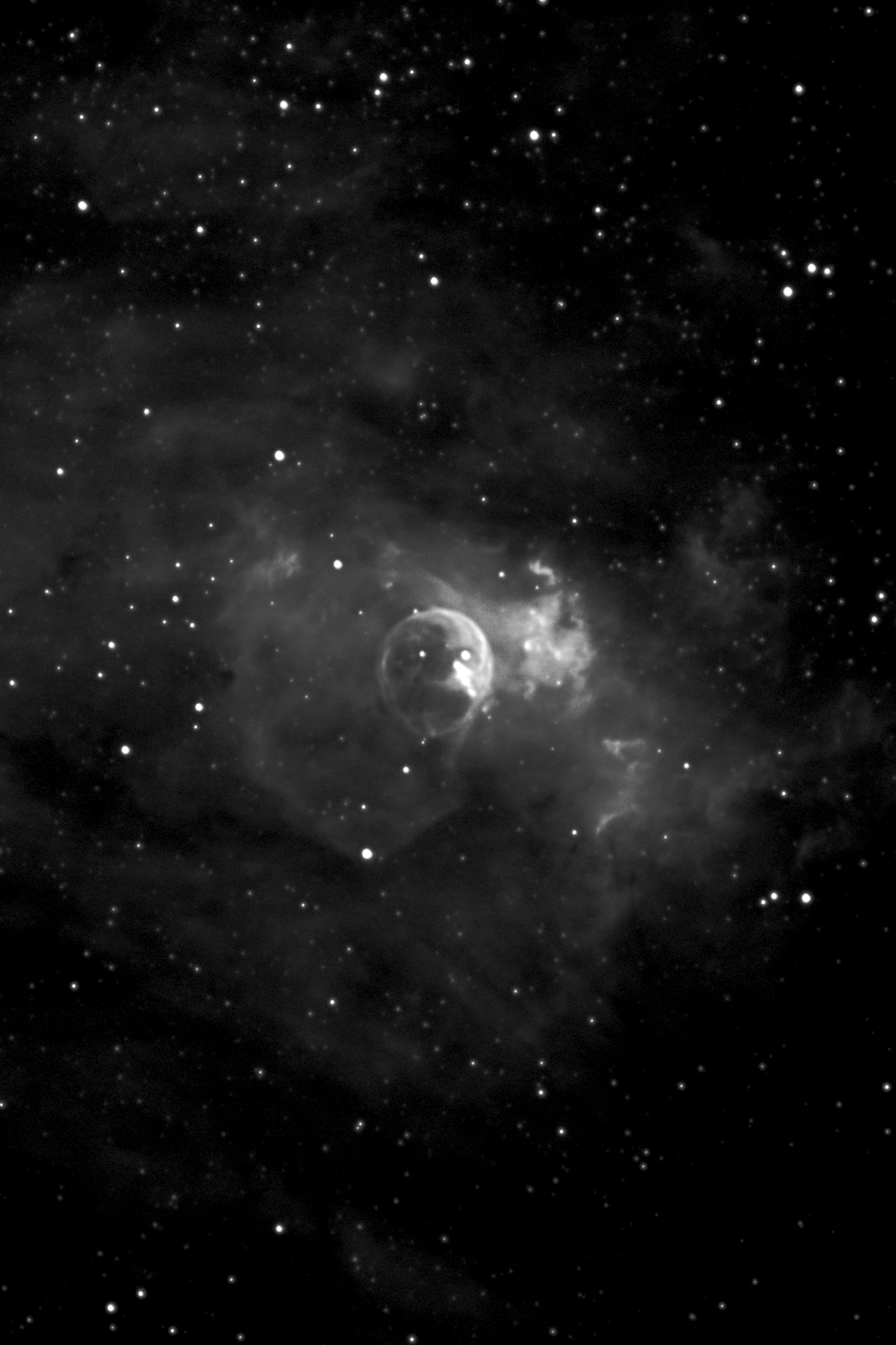
NGC7635

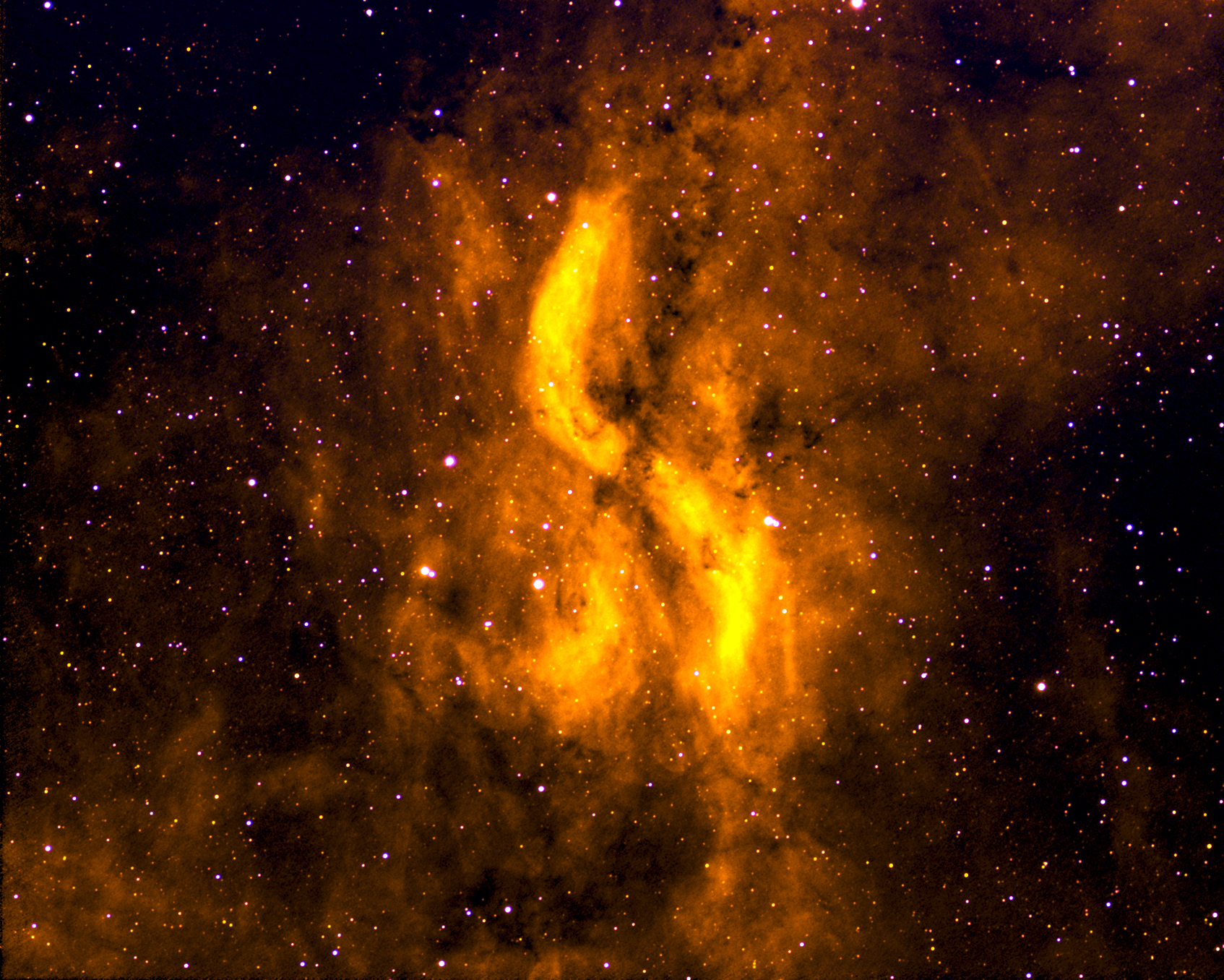
PROPELLER NEBULA (DWB111)

The Propeller Nebula is a very faint emission nebula in Cygnus. This is a stacked group of 30 five minute exposures in H-Alpha and 30 five minute exposures in O3 for a total exposure time of five hours. It was taken through the Astro-Physics 130mm Starfire Refractor and the QSI 690wsg camera.

PropellerBlend8


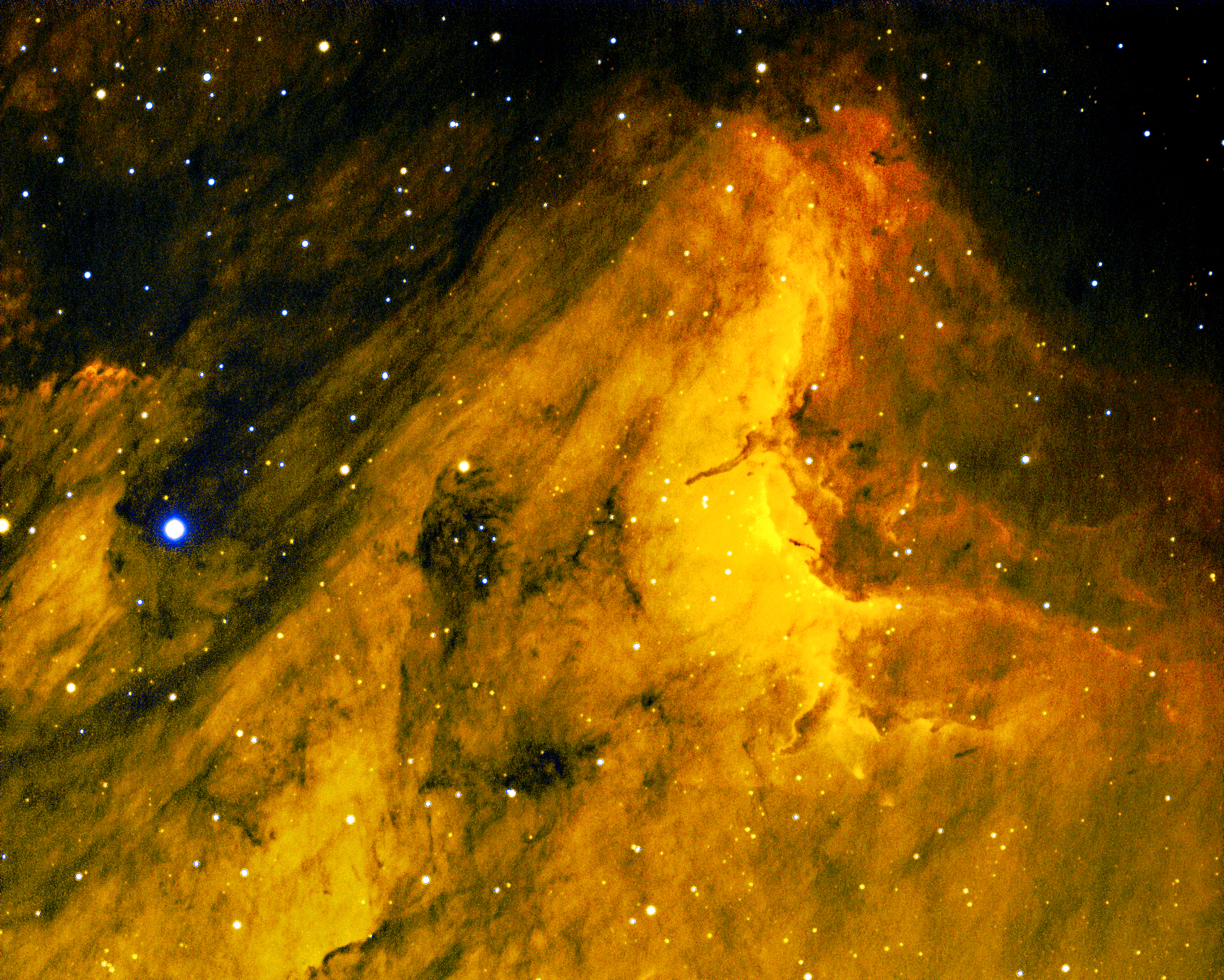
PELICAN NEBULA

With the improving weather I was able to finish this off. The benefits of longer exposures are starting to pay off. The image is a stacked composite of 90 five minute narrow band exposures taken through the Astro Physics 130MM Starfire refractor for a total exposure time of 7.5 hours. It was processed in Maxim DL and Photoshop.

PelicanHubblefinal2

PELICAN NEBULA – Work in Progress

Well, the weather is turning bad, so I don’t know when I will be able to add data to this narrow band photo of the Pelican Nebula. I would like to add a little more color and some more detail. So far I have stacked 10 five minute H-Alpha images and 10 five minute OIII images and the nebulosity is beginning to look interesting. These were taken with a QSI 690wsg camera through an Astro-Physics 130mm Starfire refractor.

IC5067

Globular Cluster M14 in the Constellation Ophiuchus.

When he discovered this object in 1764, Charles Messier described it as a nebula without stars. Obviously he was wrong, but this points out a primary difference between the efficacy of using your eyes to observe things in our digital age when ccd cameras can see details like this through a four inch refractor telescope. This is a stacked and cropped image of 40 two minute exposures taken with RGB filters by a 9.2 megapixel CCD camera.

M14

“For the same reasons that M13 is popular, globular cluster M14 is not. It is beyond the normal naked-eye limit and lies in a region of the sky belonging to an obscure constellation that never gets very high in the sky from mid-northern latitudes, yet M14 is surprisingly detailed and deserves special attention.”

Stephen James O’Meara “The Messier Objects”